Ask any experienced safari guide when the best time to visit Amboseli is, and the honest answer involves a question back: best for what? The best time for Kilimanjaro views is a different window than the best time for elephant calves. The best time for budget travellers is different again from the best time for photographers who want the classic dry-season scene. And the best time to avoid crowds does not coincide with the best time for maximum wildlife concentration.
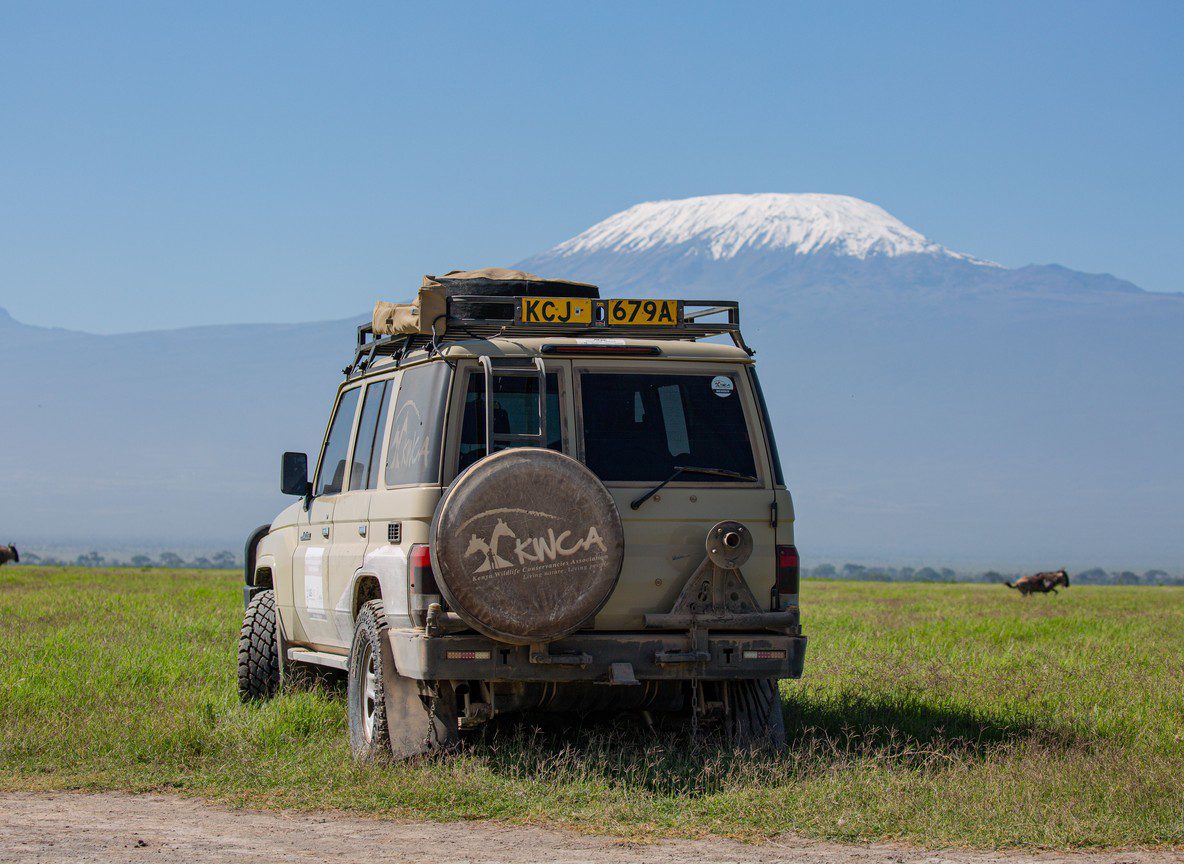
Amboseli rewards visitors in every month, but it does so in different ways depending on the season. This guide breaks down what each period delivers so you can match your trip to the experience you are actually after.
Amboseli’s Two Seasons: The Framework
Amboseli follows Kenya’s bimodal rainfall pattern, which means two wet periods and two dry periods each year.
Long Rains: March through May. Heavy, sustained rainfall. Some tracks flood. Kilimanjaro can stay cloud-covered for multiple days in a row. Very few tourists — the lowest-traffic period of the year.
Short Rains: November, extending into early December. Lighter and more intermittent than the long rains. Usually manageable for game driving, with clear mornings and afternoon showers.
Main Dry Season: June through October. Clear skies, short grass, animals concentrated around permanent water sources. This is peak season and the most popular time to visit.
January-February Dry Spell: A shorter dry window between the two rainy periods. Often underestimated but consistently excellent.
That is the basic structure. Here is what each month actually delivers.
January and February: The Underrated Window
January and February are among the strongest months in Amboseli and are routinely overlooked by first-time visitors. The short rains finish in November and December, and by January the landscape has dried from lush green to a rich golden tone. That transition produces some of the park’s most photogenic conditions.
What these months offer:
- Kilimanjaro views are excellent in January, with clear mornings before cloud builds after mid-morning
- Elephant calves born during the November-December period are now young and active — family scenes are particularly rewarding
- Visitor numbers are 30-40% lower than July-August peak
- Camp rates typically run 15-20% below high season pricing
- Waterbirds fill the swamp edges after the short rains
For travellers who want the combination of elephant calves, mountain views, and lower camp costs, January through early February is difficult to beat. The main caution is that late February can see the beginning of the long rains in some years, arriving earlier than usual.
March, April, and May: The Long Rains
March marks the start of the long rains, which run through April and taper in May. This is the lowest-demand period for tourism and not recommended for a first visit.
What changes during the rains:
Vegetation grows tall rapidly, reducing game-viewing visibility. Some tracks around the swamp systems flood and become impassable without a high-clearance 4×4. Kilimanjaro often stays hidden behind cloud for two or three days at a stretch. Wildlife disperses across the greening landscape rather than concentrating predictably near water.
What stays strong:
The elephants are still there — they never leave. Lions, leopards, and cheetahs remain part of the park year-round. Birding peaks during this period as migratory species arrive and the wetland edges fill with activity. For serious birders, April and May are genuinely excellent months.
Camp rates drop 20-35% below peak during this period. For budget-conscious travellers comfortable with variable conditions, or for repeat visitors specifically interested in birding, March through May offers real value. For anyone who specifically wants clear Kilimanjaro views or easy game drives, this is the window to avoid.
June: The Dry Season Begins
June marks Amboseli’s transformation. The long rains end, the grass starts drying down, and animals begin concentrating more predictably near the permanent swamp zones. Kilimanjaro views improve steadily through the month.
By mid-June, the park is noticeably different from May. Elephant herds return to familiar routes, lion activity increases as prey concentrates near water, and the drives feel more productive. Kilimanjaro is typically clear on roughly half of all mornings by mid-June, improving toward the end of the month.
The one limitation is that the landscape is still partly green in early June. The classic short-grass, open-ground Amboseli look arrives fully in late June and peaks through July and August.
June sits at a useful sweet spot for travellers who want dry-season quality before the July peak crowd and pricing levels kick in.
July and August: Peak Season
July and August are the most consistently strong months for game viewing, Kilimanjaro photography, and wildlife concentration. They are also the busiest and most expensive.
The grass is at its shortest, which means animals have nowhere to hide. Elephant herds gather in large numbers at the swamp edges during dawn and dusk. Lions hunt across the open short-grass plains. Buffalo herds number in the hundreds. Kilimanjaro is visible on the majority of mornings before 9 a.m., making these the months with the strongest mountain photography conditions.
The trade-offs are real: the best camps book out months in advance, and vehicle density in popular zones is at its highest. For July specifically, booking six to eight months ahead is not overstated caution — it is practical necessity.
For first-time visitors with flexibility, July and August deliver the most reliable all-round experience. For photographers specifically, August mornings in Amboseli are among the finest wildlife photography conditions in Kenya.
September and October: Excellent and Often Overlooked
September and October are the hidden gems of the Amboseli calendar.
Game viewing conditions in September are nearly identical to August. The grass is still short from the dry peak, Kilimanjaro views remain strong, elephant viewing near the swamps continues to be excellent. But camp occupancy drops by 20-30% compared to August, and prices ease accordingly. The park is busy but not crowded.
October keeps most of September’s advantages. The main variable is that the short rains can arrive at some point during the month — sometimes early October, sometimes not until November. In years when the rains come late, October can feel like a bonus extension of the dry season. When they arrive earlier, the landscape transitions quickly.
For travellers with any flexibility between August and September, September is often the better practical choice. Same quality, more space, slightly lower cost.
| Month | Kilimanjaro Views | Game Density | Crowds | Value |
|---|---|---|---|---|
| January-February | Excellent | High | Low | High |
| March | Declining | Moderate | Very Low | Moderate |
| April-May | Poor | Moderate | Very Low | High |
| June | Moderate-Good | High | Moderate | Moderate |
| July-August | Excellent | Very High | High | Low |
| September-October | Good | High | Moderate | Moderate |
| November | Variable | Moderate | Low | Moderate |
| December | Moderate | Moderate | Moderate | Moderate |
November and December: Short Rains and Recovery
November brings the short rains. Unlike the long rains, these tend to be afternoon showers rather than all-day events. Morning drives are usually fine, and the vegetation greens up quickly after the dry-season months. Kilimanjaro visibility becomes less reliable as cloud builds more readily.
December splits into two distinct characters. Early December can still feel like an extension of the short rains. By mid-to-late December, conditions stabilize and the park takes on its lushest appearance. Elephant calves are born during this period, and the Christmas and New Year weeks see a significant uptick in camp occupancy and pricing.
For travellers combining Amboseli with the Kenyan coast or Masai Mara, December is a workable month for Amboseli despite the variable weather. The park is always worth visiting — the question is always which experience you are likely to get.
Matching Month to Goal
For Kilimanjaro views: June through October, with July through September most reliable.
For elephant calves and family scenes: November through February.
For least expensive travel: March through May, accepting the trade-offs.
For best value alongside strong conditions: January-February or September-October.
For peak wildlife concentration and photography: July and August.
For a first visit: July, August, or September offer the most consistently rewarding experience. January and February are the best off-peak alternative.
Explorer Notes
A few practical points that make a real difference on the ground:
Stay length matters. Two nights is a functional minimum, three nights is better. With two nights you have limited room for weather variation; with three you can afford a quiet morning and still come away with strong memories.
Early drives are essential. Amboseli’s best light and best Kilimanjaro chances are both in the first two hours after dawn. The guests who sleep in until 8 a.m. are missing the point of the park.
Swamp areas are the anchor. Whatever time of year you visit, the permanent swamps are where elephant viewing is most reliable. Understanding that geography helps structure every drive.
Book the better camps early. Even in shoulder seasons, Amboseli’s top properties fill faster than most travellers expect. If July or August is your target, six months is not too much lead time.
For detailed camp comparisons and current seasonal conditions, see touringinsights.com. For first-hand field conditions from the ground, trunktrailssafaris.com publishes seasonal updates throughout the year.
Reader Next Steps
- Explore which Amboseli camps suit different travel styles at touringinsights.com
- Read the elephant-focused Amboseli timing guide at touringinsights.com
- Compare Amboseli with other Kenya parks for your specific travel window at touringinsights.com
- Check trunktrailssafaris.com for current availability and seasonal field reports
Prefer a different route, budget, or travel style? This plan can be adapted to fit.
Customise Your Trip